When Someone You Love Has an Eating Disorder: How to Help Without Harming
By Manas360 Expert ·
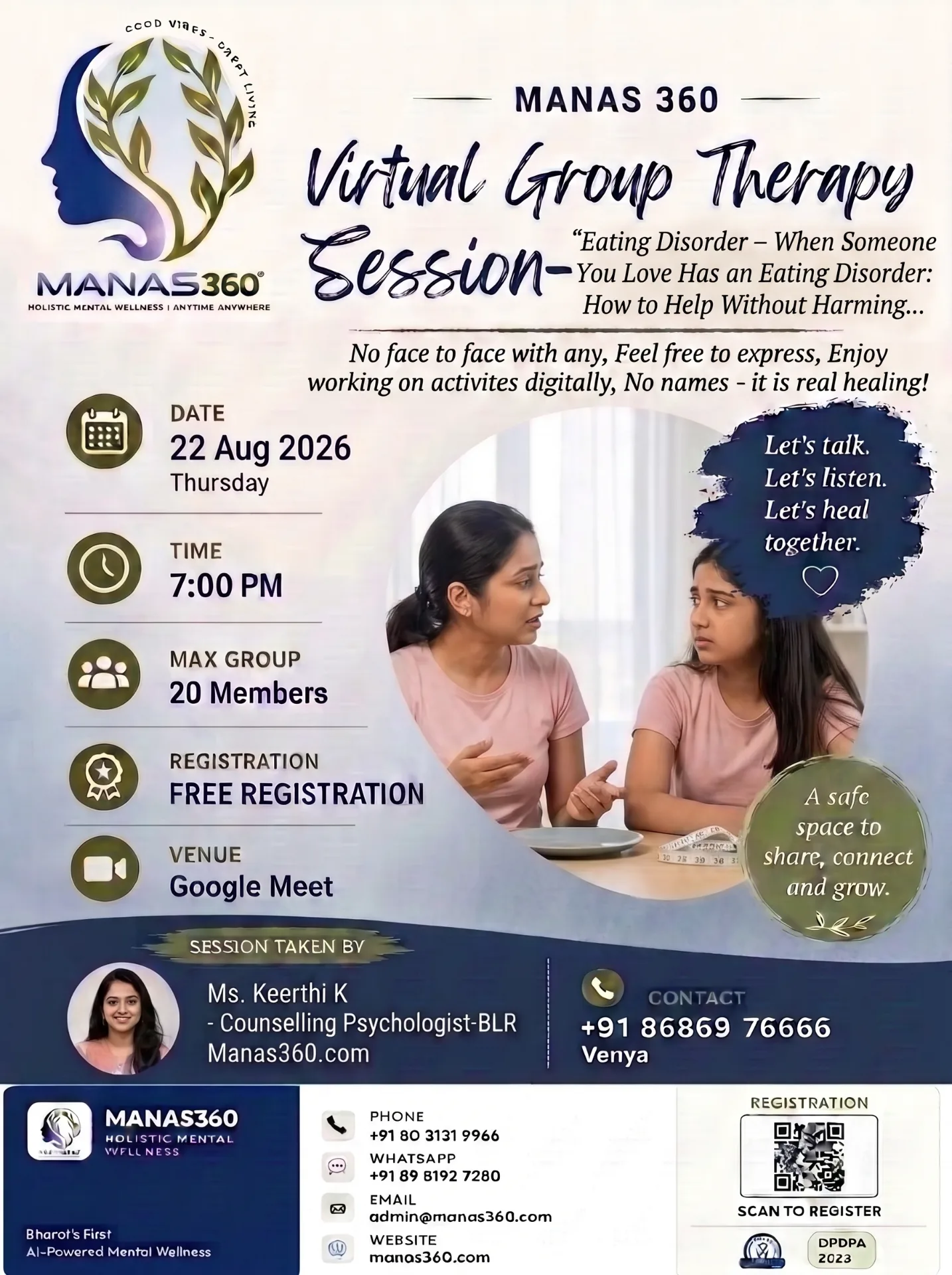
When Someone You Love Has an Eating Disorder: How to Help Without Harming
Watching someone you love struggle with an eating disorder is its own kind of heartbreak. You want to fix it, to say the right thing, to make them see. And you're often met with distance, defensiveness, or a wall you can't find your way past. If you're exhausted and frightened, that doesn't make you a bad supporter. It makes you human, and it means you care.
Here is what tends to help — and what quietly makes things harder.
Lead with the person, not the illness
The most important thing you can offer is a relationship that isn't about the eating disorder. Your loved one is still in there — with their humour, their interests, their whole self — underneath something heavy. Keep connecting with them: the shared jokes, the ordinary conversations, the film you both love. Feeling seen as a whole person, rather than as a problem to be managed, is often more healing than any conversation about the illness itself.
What not to say
With the best intentions, families often reach for comments about appearance, food, or how someone looks — even reassuring ones. These almost always land badly, because an eating disorder filters everything through a distorted lens. Try to steer away from remarks about bodies, weight, or eating, in either direction. Avoid framing it as a matter of willpower, and resist the urge to police meals or become the food monitor. That role damages trust and rarely changes the illness — it's a job for professionals, not loved ones.
What helps instead
Speak to the feelings, not the behaviours. "I've noticed you've seemed low lately, and I love you" opens a door in a way that "you need to eat" slams shut. Use gentle, non-blaming language, ideally starting from your own care: I've been worried, because you matter to me.
Listen more than you advise. You don't need the perfect words. Often what helps most is simply staying — not flinching, not lecturing, just being a steady, safe presence who isn't going anywhere. Your calm consistency says something the illness constantly denies: you are worth staying for.
Encourage help — gently, and more than once
Eating disorders are serious illnesses that usually need professional support to recover from. You can be the person who gently, repeatedly holds that door open — offering to help find a therapist, to sit with them while they make a call, to go along to a first appointment. Expect it to take more than one conversation. Ambivalence is part of the illness, not a rejection of you. Patience isn't passivity here; it's part of the support.
Look after yourself too
You cannot pour from an empty cup, and supporting someone through an eating disorder is a long road. Your own steadiness matters — for you, and for them. Seek your own support: a therapist of your own, a carers' group, trusted friends. Resentment and burnout help no one, and looking after yourself isn't selfish. It's what lets you keep showing up.
The long view
You cannot recover on someone's behalf, however much you wish you could. What you can do is love them steadily, keep the door to help open, and refuse to let the illness convince either of you that they're a lost cause. They aren't. People recover, and they recover more easily when someone believed in them along the way.
Keep showing up. It matters more than you know.
If your loved one is struggling with an eating disorder, support is available.
In India, reach the National Alliance for Eating Disorders helpline for eating-disorder support, and for wider mental-health help: iCall 9152987821, Vandrevala Foundation 1860-2662-345, or Tele MANAS 14416.
MANAS360 connects families and individuals with verified clinical psychologists in a confidential space — manas360.com. If there's any risk to life, please contact emergency services immediately.
This article offers general support and is not a substitute for professional clinical care.