Shopaholic: Is It Just Bad Budgeting or a Real Mental Health Issue?
By Manas360 Expert ·
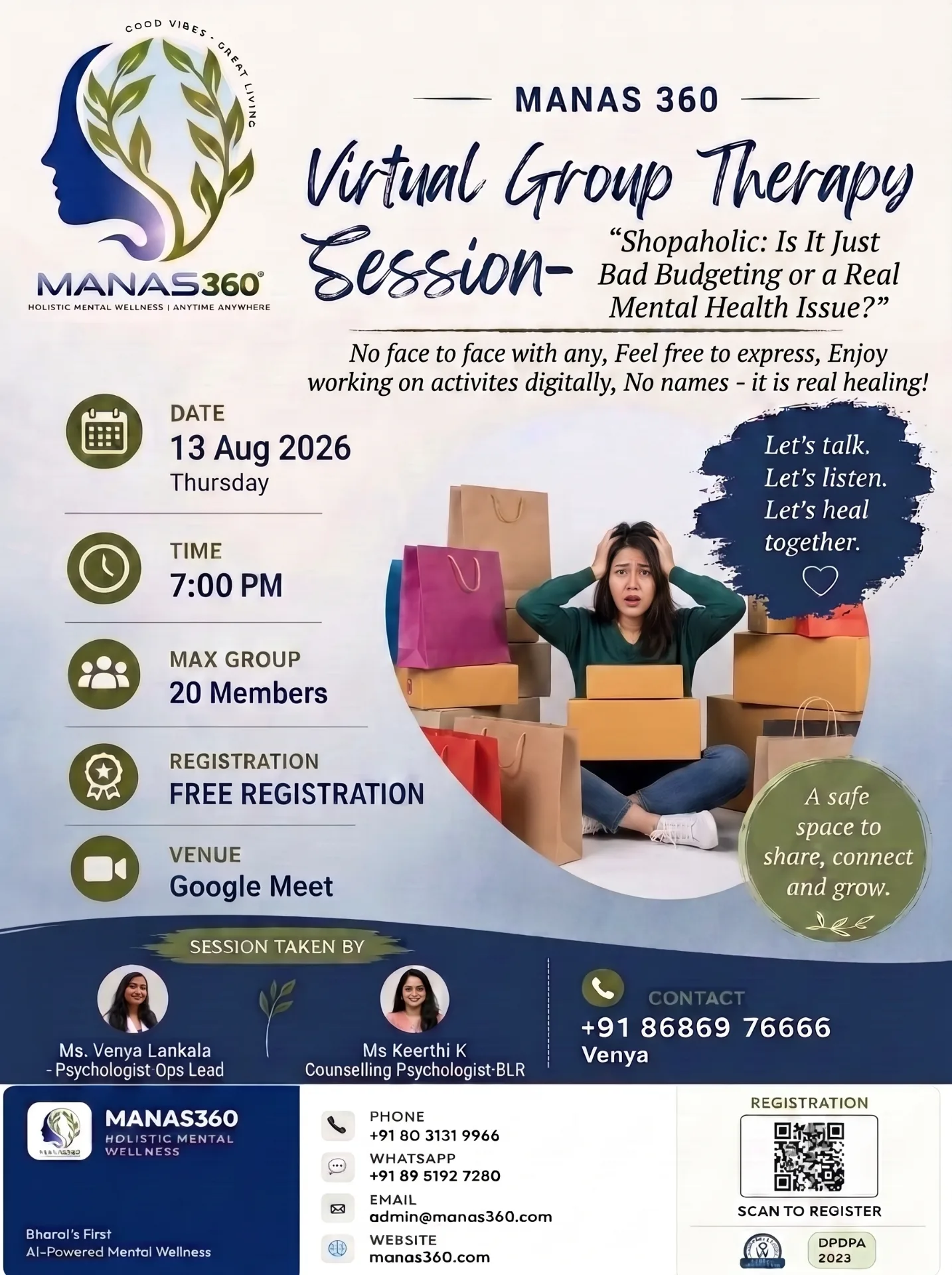
Shopaholic: Is It Just Bad Budgeting or a Real Mental Health Issue?
We’ve all made the occasional impulse purchase. A late-night scroll leads to a package on the doorstep three days later, or a stressful week at work gets rewarded with a shiny new gadget or outfit. It’s often laughed off with phrases like "retail therapy" or "treating myself."
But what happens when the buying doesn’t stop? What happens when your closet fills up with unopened boxes, credit card statements trigger wave after wave of anxiety, and yet you still find yourself clicking "Add to Cart"?
That raises a crucial question: Is being a "shopaholic" just a bad financial habit, or is it a genuine behavioral mental health condition?
Spending Issue vs. Emotional Regulation Disorder
To understand compulsive shopping, we have to look past the receipt and focus on what’s happening in the brain.
While a simple spending issue comes down to budget awareness or poor financial planning, Compulsive Buying-Shopping Disorder (CBSD) is recognized in clinical psychology as a behavioral addiction and an emotional regulation disorder.
When someone struggles with compulsive shopping, they aren't actually shopping for the item itself. They are shopping for emotional escape.
The Invisible Fear: The Dopamine & Shame Loop
Compulsive buying operates on a temporary emotional loop:
Emotional Distress / Stress -> Dopamine Spike -> Purchase -> Brief Relief -> Guilt \& Shame -> Distress
In our modern digital world, this loop is amplified. E-commerce platforms, one-click checkouts, and hyper-targeted social media ads make acting on an urge effortless.
The hardest part? The intense shame. Unlike other challenges, financial and shopping habits carry heavy social stigma. People rarely talk about their secret credit card debt or shopping habits out of fear of being judged as irresponsible or reckless. This secrecy creates isolation, and isolation breeds even more emotional distress—keeping the loop going.
Why Traditional Solutions Fall Short
When people recognize they have a spending problem, the standard advice is usually: "Make a strict monthly budget," "Delete your shopping apps," or "Take a financial literacy course."
While practical, these steps often fail because they treat the symptom rather than the cause. A budget manages dollars and cents, but it doesn't address the late-night work anxiety, the underlying loneliness, or the feelings of burnout that triggered the urge to spend in the first place.
Similarly, traditional Employee Assistance Programs (EAPs) or generic wellness webinars tend to offer surface-level advice or passive videos that yield minimal long-term behavior change.
Healing Together: The Power of Anonymous Group Therapy
So, how do we actually break the cycle?
Clinical evidence shows that group therapy is one of the most effective environments for managing compulsive behaviors. When individuals join a group of peers facing similar struggles, the overwhelming secrecy and shame begin to evaporate.
By leveraging modern, anonymous virtual group therapy platforms, participants can experience a truly transformative path to healing:
1. Psychological Safety & True Anonymity
Anxiety surrounding financial shame makes opening up in person intimidating. Anonymous digital spaces allow participants to drop the corporate or social mask and talk openly about real disorder loops without fear of workplace or personal judgment.
2. Interactive Trigger Mapping
Rather than sitting through a lecture, group members participate in live digital exercises—mapping out external triggers (like flash sales or promotional emails) and internal triggers (like stress or solitude) on collaborative digital whiteboards.
3. Practical Behavioral Toolkits
Participants learn and practice real-time coping strategies together, including:
Friction Engineering: Creating cooling-off periods (like the 72-Hour Cart Rule) between an urge and a purchase.
Urge Surfing: Mindfulness techniques that help individuals observe the physical "itch" to spend as a wave that crests and naturally passes without acting on it.
Dopamine Swaps: Replacing high-cost emotional escapes with healthy, restorative habits.
4. Shared Accountability
Moving from isolated 1-on-1 sessions to collective group experiences reinforces a vital truth: You are not broken, and you are not alone.
Moving from Impulse to Empowerment
Compulsive shopping isn't a sign of bad character or poor math skills—it's a signal that your mind and body are trying to deal with unaddressed emotional stress.
By shifting the narrative from judgment to understanding, and by replacing rigid budgets with real emotional management tools, we can break the cycle of panic and regain control.
🌐 Join Our Next Virtual Group Session
If you or your team want to explore evidence-based strategies for managing anxiety, emotional stress, and impulse loops in a safe, anonymous space, join us for our upcoming interactive session:
📌 Topic: Anxiety & Emotional Regulation: Moving from Panic to Power
📅 Date: Thursday, August 13, 2026 | 🕖 Time: 7:00 PM IST
👉 Reserve Your Seat: WA + 91 89 51 92 72 80