Seasonal Affective Disorder (SAD) in India: Cope or Thrive? | MANAS360
By Manas360 Admin ·
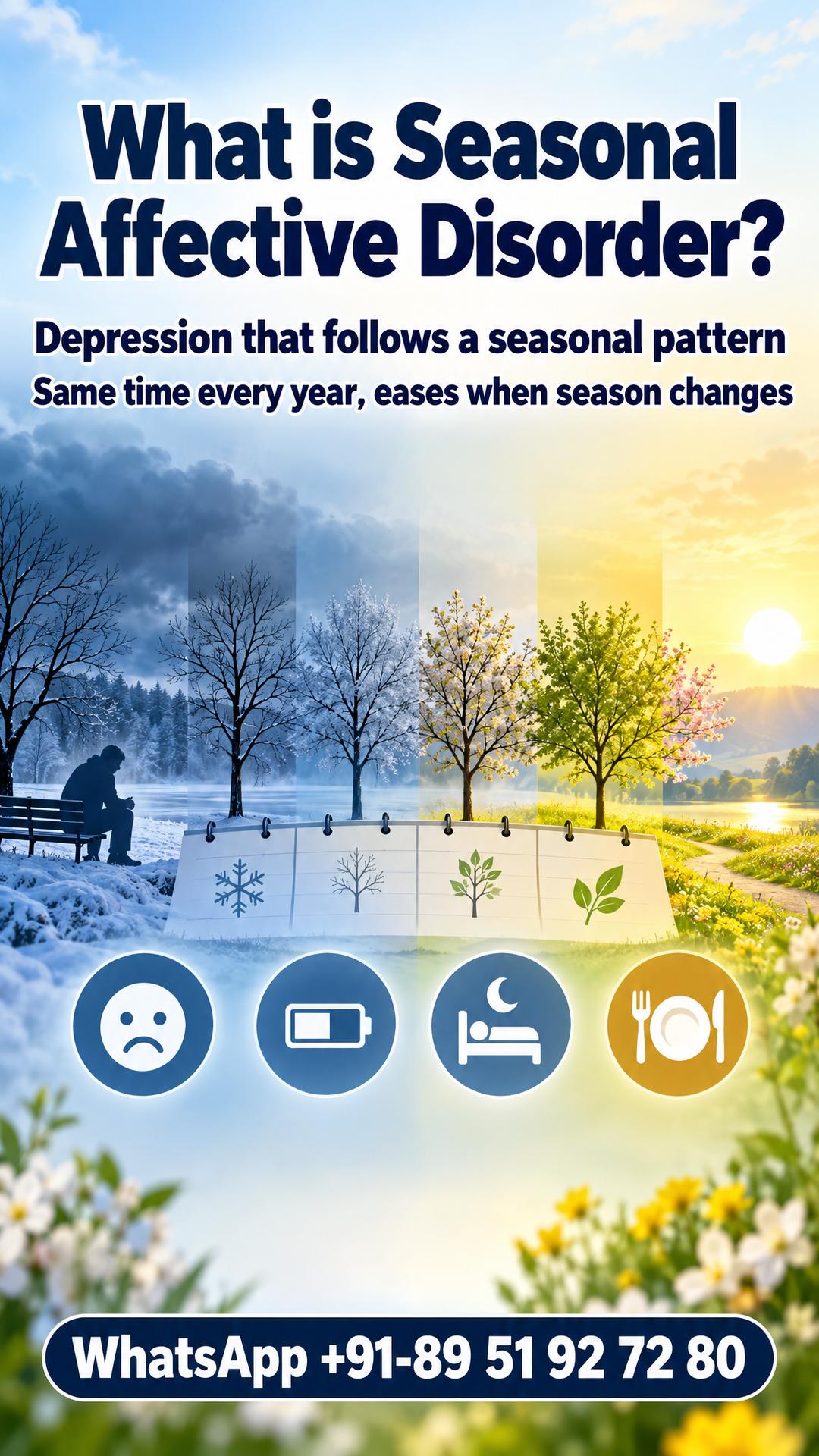
What is seasonal affective disorder (SAD)?
Seasonal affective disorder is depression that follows a seasonal pattern: it begins around the same time every year and eases when the season changes. Doctors do not treat it as a separate illness. In the DSM-5-TR it is a "seasonal pattern" specifier for recurrent major depression, which means at least two years of episodes that start and end with a particular season.
In short: if your mood, energy, sleep and appetite dip on a calendar, not just on a bad week, it may be SAD.
Can you get SAD in India?
Yes. SAD is most studied in cold, dark countries, but Indian research shows seasonal mood patterns here too, often in a different shape:
Winter pattern (North India and hills). Short days and fog in Kashmir, Himachal, Uttarakhand, Punjab and Delhi NCR. A study from Kashmir found winter depression mostly in young adults aged 20–30, with low or anxious mood and low energy as the commonest features.
Summer pattern (much of India). A study comparing students in India and Italy found summer SAD was more common among the Indian students, while winter SAD was more common in Italy. Researchers linked this to high summer temperatures.
Monsoon and post-monsoon dips. Weeks of grey skies, waterlogged commutes and indoor days. A North Indian hospital study found mood-disorder visits peaked in the autumn and monsoon months.
Indoor-life SAD (cities). Bengaluru, Mumbai, Hyderabad and Pune professionals who leave home in the dark, sit under office lights and return after sunset can get very little daylight in any season.
NRI and diaspora. Indians who move to the UK, Canada, northern US or Europe often meet their first real winter, and their first winter depression, abroad.
Winter blues or SAD: what is the difference?
Winter or seasonal blues are mild. You feel a little low but still enjoy things, work and relationships carry on mostly as normal, and the mood lifts within days or after a good weekend. Self-care is usually enough.
Seasonal affective disorder goes deeper. Sadness or emptiness lasts most days for weeks or months, work, study or family life is clearly affected, and it comes back every year, lifting only when the season changes. It usually needs self-care plus light therapy, talk therapy or medical care.
Symptoms of seasonal affective disorder
Common to all patterns: low mood most of the day, loss of interest, hopelessness, poor focus, withdrawing from people, feeling worthless.
Winter pattern: oversleeping, heavy limbs, craving carbs and sweets, weight gain, a "hibernation" feeling.
Summer pattern: poor sleep, low appetite, weight loss, restlessness, irritability, anxiety.
If you also have thoughts of self-harm, do not wait for the season to pass. Call Tele MANAS 14416 now.
Why does SAD happen?
The main driver is light. Less daylight can shift your body clock, raise melatonin (the sleep hormone) at the wrong time and lower serotonin, which helps steady mood. In hot climates, heat stress, broken sleep and staying indoors to escape the sun appear to play a role. Risk is higher if you have a personal or family history of depression or bipolar disorder, are a young adult, or spend most daylight hours indoors.
Cope or thrive: what is the difference?
Coping is surviving the season: pushing through, sleeping it off, waiting for spring or the rains to end. It works for a while, but the dip returns every year and often deepens.
Thriving is treating the season as predictable and planning for it, the way farmers plan for monsoon. You know your month, you start early, and you build habits that protect your mood before it falls.
In coping mode, you notice the dip only after it hits, sleep more and move less, hide it from family and colleagues, wait for the season to change, and lean on food, scrolling or alcohol to get through.
In thriving mode, you mark your risk month in the calendar, keep a fixed wake time with morning light and a daily walk, tell at least one person and plan lighter weeks, start support four to six weeks before your usual dip, and rely on proven tools such as light, CBT and routine.
How to thrive: a 7-step seasonal plan
Map your pattern. Look back at the last two years. Which month did energy, sleep or mood drop? Mark it and the month before it.
Get morning light, daily. Step outside within an hour of waking for 20–30 minutes, even on cloudy days. Outdoor light is many times brighter than indoor light.
Consider bright light therapy (winter pattern). A 10,000-lux white light box used for about 20–30 minutes in the first hour after waking is the standard approach. Improvement often shows within a couple of weeks. Check with a professional first if you have bipolar disorder, eye conditions or take light-sensitising medicines.
Protect your body clock. Same wake time all week. In summer, keep the bedroom cool and dark; in winter, avoid sleeping in past daylight.
Move every day. A brisk 30-minute walk, yoga or cycling, outdoors if you can. In peak summer, move in the early morning.
Eat for steady energy. Regular meals with protein, whole grains, dals, fruit and vegetables. Watch the winter sweets-and-chai loop and summer meal-skipping.
Stay connected and get support early. Plan one social thing a week. If symptoms return every year, talk to a professional before the season, not in the middle of it.
What treatments work for SAD?
Bright light therapy: the best-studied treatment for winter SAD, safe for most people, with mild side effects such as eye strain or headache.
Cognitive behavioural therapy (CBT): helps you change the thoughts and habits that pull your mood down each season, and its benefits can last into future years.
Medication: a psychiatrist may suggest antidepressants, sometimes started before your usual risk season.
Supportive tools: sound therapy, mindfulness and journaling can help alongside, not instead of, the above.
When to seek help
Speak to a professional if:
The low mood lasts more than two weeks.
It returns at the same time every year.
Work, studies, sleep or relationships are suffering.
You are leaning on alcohol, food or screens to get through.
You have any thoughts of self-harm (call 14416 right away).
How MANAS360 can help
MANAS360 helps you move from coping to thriving, from home and in your language:
Free 2-minute screening (PHQ-9 + GAD-7) at manas360.com or on WhatsApp in 5 languages.
TherapeuticGPS matching with verified psychologists and psychiatrists by concern, language and schedule. Sessions from ₹299.
Scheduled white light therapy reminders for SAD and mood, inside the app.
AnytimeBuddy, a 24/7 AI companion for low days between sessions.
NRI teletherapy in INR for Indians facing their first winter abroad (UK, UAE, US).
Start before your season starts. Take the free screening at manas360.com.
Frequently asked questions
What is seasonal affective disorder in simple words? It is depression that comes and goes with the seasons, usually the same months every year, and lifts when the season changes.
Can people in India get seasonal affective disorder? Yes. Winter SAD is seen in North India and the hills, and summer-pattern SAD appears to be more common in hot regions. Long monsoon spells and indoor city lifestyles can also trigger seasonal low mood.
Is SAD only a winter problem? No. Summer SAD exists and tends to bring insomnia, poor appetite, weight loss and irritability, unlike the oversleeping and carb cravings of winter SAD.
Is winter blues the same as SAD? No. Winter blues are mild and do not disrupt daily life. SAD is a clinical depression that returns every year and affects work, sleep and relationships.
Does light therapy really work? For winter SAD, yes. Research reviews show bright light of 10,000 lux used each morning improves symptoms for many people, often within one to two weeks. It is less proven for summer SAD.
How long does seasonal depression last? Usually four to five months a year, roughly the length of the trigger season, unless it is treated.
How can I beat seasonal depression naturally? Morning outdoor light, a fixed wake time, daily exercise, regular meals and staying socially connected help many people. If symptoms are moderate or severe, add therapy.
Can I get online therapy for SAD in India? Yes. MANAS360 connects you with verified psychologists and psychiatrists online across India and for NRIs, starting with a free 2-minute screening.
Is SAD a sign of bipolar disorder? Not usually, but some people with bipolar disorder have seasonal mood shifts. If you notice periods of unusually high energy or little need for sleep, tell your doctor before starting light therapy.